
Cedar Valley Arboretum and Botanical Gardens blooms with wide varieties of growth
Tracy Grandy is a gardener interpretive coordinator at Cedar Valley Arboretum and Botanical Gardens.
Grandy said, “Interpretation in a botanical garden setting means that I create things/experiences that make the gardens meaningful to visitors. So, I create educational signage, do public presentations, conduct classes, create self-guided tours, and lead guided garden tours. I also do special therapeutic horticulture projects, such as gardening with a grief support group that meets at the Arboretum. And I do basic gardening tasks every day, such as planting, weeding, fertilizing, and watering.”
Grandy said, “If you’ve never been to the Cedar Valley Arboretum & Botanic Gardens, I encourage you to come see us.”
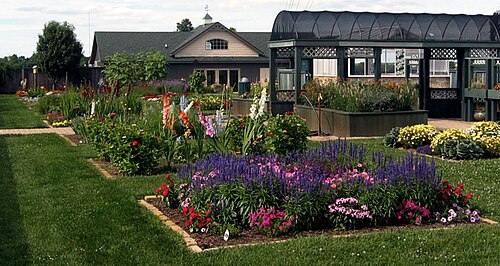
Grandy said, “We have hundreds of different kinds of flowers at the Cedar Valley Arboretum & Botanic Gardens. Some spring flowers that have been blooming recently are daffodils, Persian lilies, catmint, lungwort, dwarf iris, and grape hyacinth. All of those are perennial flowers, meaning they survive our cold winters and bloom year after year. We also have some containers on display now that contain pansies, astilbe and pincushion flowers.”
The botanical garden also has Grandy said, “As it gets warmer, we’ll have peonies, many roses, over 70 different kinds of daylilies, coneflowers, black-eyed-Susans, lavender, and more. Our raised beds (which are now filled with tulips that will be removed soon) will contain many kinds of annual flowers, flowers that only last one season. They die when it gets cold in late fall. Some annuals that we’ll plant include snapdragons, lantana, canna, vinca, calibrachoa, salvia, and osteospermum.”
Perennials bloom for one month or several, depending on the plant. Most popular perennials are daylilies, coneflowers, and black-eyed susans. They are typically watered every week with one inch of water. Regular care like cutting off the dead flowers, encourages the plant to rebloom.
Grandy said, “I love many kinds of flowers but one of my favorites is lavender. Another favorite group of plants are those planted in our sensory garden. These plants were chosen for the garden because they are interesting to smell, look at, and touch. Anise hyssop is one of the plants in the sensory garden. The leaves smell and taste like licorice and bees love the purple flower spikes.”
Bulbs bloom for two to four weeks. The blooms shrink before the next time they bloom. Tulips, daffodils, dahlias, lilies, and alliums are flowers that bloom from bulbs. Bulbs are typically watered once a week, overwatering causes the roots to mold.
Grandy said, “The weekly garden walking tour is a new event this year. In past years, visitors had to request and schedule a guided tour ahead of time.”
Annuals are typically planted in spring and bloom until fall. Annuals’ most popular flowers are petunias, geraniums, impatiens, marigolds and calibrachoa.
Grandy said. “The guided walking tour happens at 9:30 am every Friday morning, May through September. Visitors learn about our 40-acre arboretum/botanic garden, and I highlight the plants that are currently blooming.”
Grandy said, “As I mentioned previously, we have many flowers that come back (perennials) and also many that we plant each year (annuals).”
Grandy talked about why she chose this career. She said, “This is a second career for me. I have always loved gardening and have been planting and caring for plants since I was a child. However, I am actually trained in clinical psychology and was a professor of psychology for 26 years at Hawkeye Community College. A few years ago, I earned a certificate in horticultural therapy and retired early from teaching. Horticultural therapy involves using plants/gardening/nature to help people improve their mental and physical health. A lot of the programming that I create at the Arboretum is wellness-related. I had been volunteering at the Arboretum & Botanic Gardens for years previously, and began as a paid employee about three years ago.”
Grandy said, “We have many kinds of bushes, some that produce flowers such as lilacs, hydrangeas, spirea, and buttonbush. We also have over 700 trees, both deciduous and evergreen. We have a one-acre orchard where we grow apples, pears, cherries and plums. We have a 4-acre butterfly meadow and four mosaicultures, which are living sculptures (metal frames in the shape of a frog, bison, peacock, and bees that are planted with hundreds of plants)”
You may also like...



-

Cedar Bend hosts successful cat yoga event
The Humane Society hosted an event last weekend on Saturday, May 2 for cat yoga at the Outreach and Education Center. There were many participants who showed up for...


You must be logged in to post a comment Login